The Shift Toward Off-Grid Lighting in Modern Engineering Projects
Across construction, infrastructure maintenance, emergency response, and event management, the demand for independent lighting systems is increasing rapidly.
Traditional diesel lighting towers, once the standard solution for nighttime work environments, are now being replaced due to rising concerns over:
- Fuel consumption costs
- Carbon emissions regulations
- Noise restrictions in urban environments
- Continuous maintenance requirements
In response, solar-powered mobile lighting systems have become a practical and scalable alternative for field operations requiring flexible illumination.
What Defines a Modern Solar Lighting Tower System?
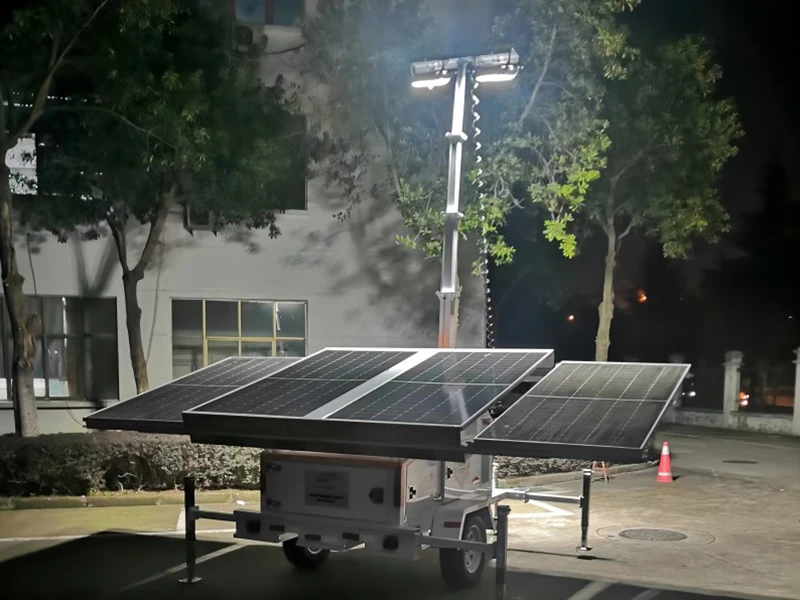
A solar lighting tower is a self-sufficient mobile illumination unit designed for off-grid deployment. It typically integrates four core subsystems:
- Photovoltaic energy generation modules
- Lithium battery energy storage systems
- High-output LED lighting arrays
- Intelligent control and monitoring units
These components work together to deliver autonomous lighting without external power dependency.
Core Engineering Principle: Energy Autonomy
Unlike traditional generator-based lighting equipment, solar lighting towers operate through an energy cycle:
- Solar panels capture daylight energy
- Energy is stored in battery systems
- Stored power is released during nighttime operation
- Intelligent controllers regulate output efficiency
This design eliminates the need for fuel logistics and reduces operational complexity in remote environments.
Lighting Performance in Field Conditions
Modern solar lighting towers are designed to meet demanding industrial illumination requirements.
High-Efficiency LED Illumination
- Wide-area lighting coverage
- Stable brightness output
- Reduced energy consumption per lumen
Adaptive Energy Management
Integrated controllers adjust system performance based on:
- Ambient light conditions
- Battery charge levels
- Operational time schedules
This ensures consistent lighting performance throughout extended deployment cycles.
360° Operational Coverage
Many systems are engineered to illuminate large work zones evenly, improving visibility across construction or operational sites.
Key Advantages of Solar Lighting Tower Deployment
1. Zero Fuel Dependency
By eliminating diesel consumption, operators remove:
- Fuel procurement logistics
- Price volatility risks
- On-site storage requirements
2. Reduced Environmental Impact
Solar systems produce no direct emissions during operation, supporting compliance with environmental and sustainability standards in regulated markets.
3. Lower Acoustic Pollution
Without combustion engines, these systems operate quietly, making them suitable for:
- Urban construction zones
- Residential-adjacent projects
- Nighttime public works
4. Flexible Mobility and Rapid Deployment
Trailer-based or wheeled configurations allow:
- Fast relocation between work zones
- Quick setup without infrastructure modification
- Adaptability to changing project layouts
Application Scenarios in Industrial and Public Sectors
Construction and Infrastructure Projects
Solar lighting towers are widely used in:
- Road construction and resurfacing
- Bridge and tunnel works
- Nighttime infrastructure maintenance
They improve worker safety and enable continuous operations in low-light conditions.
Emergency and Disaster Response
In crisis environments where grid power is unavailable, solar lighting towers provide:
- Rapid deployment lighting
- Continuous illumination for rescue operations
- Temporary command and control visibility
Outdoor Events and Temporary Installations
For large-scale gatherings such as festivals and sports events, these systems offer:
- Clean, silent lighting
- Reduced generator dependency
- Flexible positioning across venues
Industrial and Remote Sites
They are also effective in:
- Mining operations
- Remote logistics hubs
- Off-grid industrial facilities
Design and Technology Development Trends
The evolution of solar lighting towers is driven by improvements in energy and digital technologies.
Advanced Solar Panel Efficiency
Modern systems utilize higher conversion efficiency panels that perform better under variable weather conditions.
Battery Storage Improvements
Lithium battery technology continues to improve in:
- Energy density
- Charging efficiency
- Lifecycle durability
Intelligent Remote Monitoring
Next-generation systems increasingly support:
- Remote status monitoring
- Power level diagnostics
- Operational scheduling control
- Fault detection alerts
These capabilities reduce manual maintenance requirements and improve fleet management efficiency.
Role in Sustainable Infrastructure Development
Solar lighting towers are becoming part of broader sustainability initiatives in global infrastructure projects.
They contribute to:
- Reduced carbon emissions in construction operations
- Compliance with environmental regulations
- ESG performance improvement
- Sustainable procurement strategies
As governments and contractors prioritize low-impact construction methods, solar-powered systems are becoming standard equipment in many project tenders.
HANKUN Solar Lighting Tower Solutions
HANKUN develops mobile lighting systems designed for demanding field applications, including:
- Solar Lighting Towers
- Mobile LED Lighting Trailers
- Hybrid Energy Lighting Systems
- Construction Site Safety Equipment
Our solutions are built for:
- Infrastructure contractors
- Emergency response teams
- Municipal engineering departments
- Industrial and remote operations
Each system is engineered with emphasis on:
- Operational reliability in harsh environments
- Energy efficiency and autonomy
- Rapid deployment capability
- Long service lifecycle performance
Request a Customized Lighting Solution
If your project requires independent, low-emission lighting infrastructure, HANKUN can design a system based on:
- Site conditions and terrain
- Required illumination coverage
- Deployment duration
- Mobility requirements
- Energy autonomy expectations