Why Solar Lighting Towers Are Becoming Standard in Field Lighting Systems
As infrastructure development shifts toward low-carbon and energy-efficient operations, traditional diesel-powered lighting systems are being replaced by mobile solar lighting solutions.
A solar lighting tower is no longer viewed as an experimental green device—it has become a practical field equipment category widely used in ports, transportation corridors, tourism infrastructure, construction sites, and ecological protection zones.
The main reason for this shift is not only environmental compliance, but also operational flexibility and lifecycle cost optimization.
Core Value of Solar Lighting Tower Systems
Modern solar lighting towers integrate:
- High-efficiency photovoltaic panels
- Lithium battery energy storage systems
- High-lumen LED lighting modules
- Intelligent power control systems
- Mobile trailer or skid-mounted platforms
This configuration enables fully independent operation without fuel supply chains or permanent electrical infrastructure.
Key benefits include:
- Zero on-site emissions
- Reduced operational logistics
- Flexible deployment across terrains
- Minimal noise output
- Lower long-term maintenance requirements
Application Scenario 1: Port and Terminal Operations
Ports operate continuously under 24/7 conditions, requiring stable nighttime illumination for navigation, loading, and yard operations.
Solar lighting towers support port environments by:
- Providing consistent dock and yard illumination
- Reducing dependency on grid expansion projects
- Supporting vessel loading and unloading safety
- Lowering energy-related operational costs
Compared to diesel lighting systems, solar-based units significantly reduce fuel logistics complexity and maintenance interruptions.
Application Scenario 2: Tourism and Cultural Scenic Areas
Tourism zones require a balance between lighting functionality and environmental aesthetics.
Solar lighting towers are widely deployed in:
- Historic streets
- Waterfront scenic corridors
- Cultural heritage districts
- Public parks and leisure zones
Their advantages in tourism environments include:
- Soft, non-intrusive illumination
- Reduced noise pollution
- Integration with landscape design
- Flexible lighting modes for different events
This allows operators to enhance visitor experience while preserving ecological and visual harmony.
Application Scenario 3: Ecological Forest and Protected Areas
In environmentally sensitive regions, construction and infrastructure must avoid ecological disruption.
Solar lighting towers are particularly suitable for:
- Forest parks
- Mountain trails
- Nature reserves
- Ecological monitoring zones
Because they require no trenching or cable installation, they help avoid:
- Vegetation damage
- Soil disturbance
- Long-term environmental impact
At the same time, they provide essential safety lighting for night-time operations and visitor movement.
Application Scenario 4: Highway and Infrastructure Construction Sites
Construction environments require temporary yet high-performance lighting systems.
Solar lighting towers are commonly used for:
- Night paving operations
- Bridge construction zones
- Road expansion projects
- Emergency repair work
Their advantages include:
- Rapid deployment and relocation
- Independence from grid power
- Stable lighting under dynamic site conditions
- Reduced reliance on diesel generators
This improves both safety compliance and construction efficiency.
Application Scenario 5: Industrial and Remote Work Zones
Remote industrial sites often face challenges such as:
- Lack of electrical infrastructure
- Difficult fuel logistics
- Harsh environmental conditions
Solar lighting towers provide an effective solution by operating independently in:
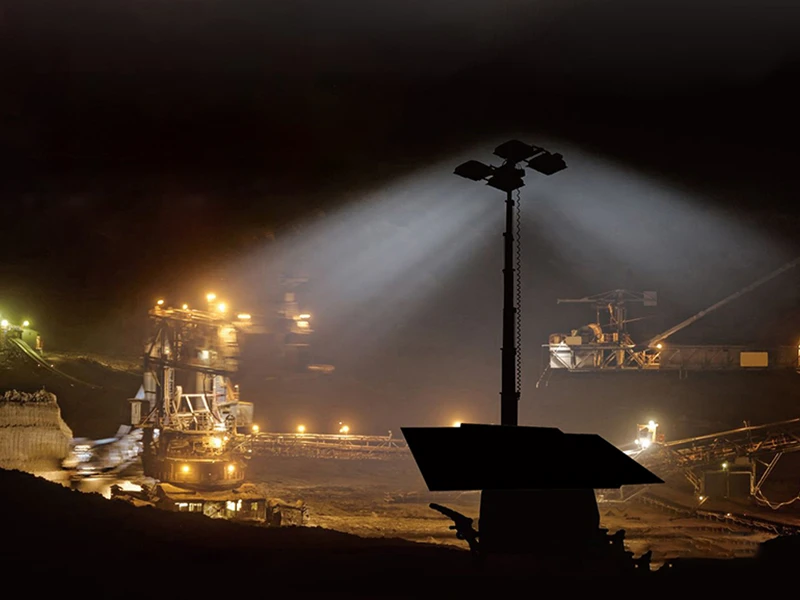
- Mining sites
- Oil and gas fields
- Remote logistics hubs
- Temporary industrial camps
Engineering Advantages in Real-World Deployment
Beyond environmental benefits, solar lighting towers offer measurable operational improvements:
1. Reduced Operating Complexity
No fuel supply chain, no generator maintenance, and fewer moving mechanical parts.
2. Flexible Mobility
Trailer-mounted systems can be repositioned as project layouts change.
3. Stable Nighttime Performance
Battery storage ensures continuous operation during low-sunlight conditions.
4. Intelligent Energy Management
Modern systems adjust output based on:
- Ambient lighting conditions
- Battery status
- Operational scheduling
Role in Green Infrastructure Development
Solar lighting towers are increasingly part of broader sustainability strategies in infrastructure projects.
They contribute to:
- Carbon reduction targets
- ESG compliance requirements
- Green construction certification standards
- Low-impact engineering practices
This makes them particularly relevant for government-funded and internationally financed projects.
Technology Evolution Trends
Current development trends in solar lighting towers include:
- Higher-efficiency photovoltaic modules
- Compact foldable solar panel designs
- Smart remote monitoring systems
- Hybrid energy backup configurations
- Integrated IoT diagnostics
These advancements are expanding their usability from temporary lighting to semi-permanent infrastructure support systems.
HANKUN Solar Lighting Tower Solutions
HANKUN designs and manufactures mobile lighting systems for infrastructure and field applications, including:
- Solar Lighting Towers
- Mobile LED Lighting Trailers
- Hybrid Power Lighting Systems
- Integrated Construction Safety Equipment
Our systems are engineered for:
- Construction contractors
- Port operators
- Municipal infrastructure departments
- Environmental and forestry agencies
- Industrial site operators
Each solution is designed with a focus on:
- Field durability
- Energy efficiency
- Rapid deployment capability
- Long service lifecycle performance
Request a Customized Lighting Solution
If your project requires mobile, low-emission, and reliable lighting infrastructure, HANKUN can configure a system based on:
- Site environment
- Operational duration
- Mobility requirements
- Illumination range
- Energy autonomy needs