Selecting an Amber VMS Is About More Than Price
When evaluating an Amber Variable Message Sign (VMS), many buyers focus primarily on purchase cost. However, for traffic management contractors, government agencies, and equipment rental providers, display performance and long-term reliability often have a much greater impact on total project costs.
A lower-priced sign may save money initially, but poor visibility, frequent maintenance, and shortened service life can quickly increase operating expenses.
This guide explains the key factors that determine the performance of an Amber VMS and how to select the most suitable configuration for your application.
Why Display Technology Matters
The primary function of a Variable Message Sign is to communicate information clearly to drivers under all weather and lighting conditions.
Whether the sign is used for:
- Road construction zones
- Highway maintenance projects
- Traffic diversion programs
- Emergency response operations
- Event traffic management
Drivers must be able to read messages quickly and accurately.
The visibility of an Amber VMS is largely influenced by the design of its LED display system.
Understanding LED Pixel Design
Every Amber LED Traffic Sign consists of thousands of LEDs arranged into pixels.
The pixel design determines:
- Daytime visibility
- Nighttime readability
- Display uniformity
- Energy consumption
- Service life
- Maintenance requirements
Different manufacturers may use different LED configurations, resulting in significant performance differences even when the display resolution appears identical.
Single-LED Pixel Design
In a basic configuration, each pixel contains one amber LED.
This design is commonly used in entry-level displays because it offers:
- Lower manufacturing costs
- Reduced power consumption
- Simplified circuitry
However, the brightness output is limited compared to multi-LED pixel structures, making it more suitable for lower-demand applications.
Multi-LED Pixel Design
Professional outdoor VMS displays typically utilize multiple LEDs within each pixel.
A 2×2 LED arrangement provides:
- Enhanced brightness
- Improved viewing distance
- Better message clarity
- More uniform color appearance
- Greater operational redundancy
For roadside environments where visibility is critical, multi-LED designs generally provide superior performance and longer service life.
Matching the Right VMS to Your Project
Not every project requires the same display specification.
Temporary Urban Traffic Control
Recommended Features:
- Standard brightness
- Basic communication system
- Compact cabinet design
Suitable for:
- City maintenance work
- Utility repairs
- Short-duration projects
Highway Construction Projects
Recommended Features:
- High-brightness display
- Industrial-grade LED modules
- IP65 or higher protection
- Remote message control
Suitable for:
- Long-distance visibility requirements
- High-speed traffic environments
- Continuous operation
Mobile Traffic Safety Fleets
Recommended Features:
- Solar-powered operation
- Trailer-mounted platform
- Wireless communications
- High-capacity battery system
Suitable for:
- Rental companies
- Traffic management contractors
- Infrastructure maintenance fleets
Key Factors Affecting Amber VMS Performance
LED Quality
The quality of LEDs directly influences:
- Brightness consistency
- Color stability
- Operating lifespan
Industrial-grade LEDs typically maintain performance longer in harsh outdoor conditions.
Controller Technology
Modern VMS systems support:
- Remote management
- Real-time content updates
- Diagnostics monitoring
- Scheduling functions
Advanced controllers improve operational efficiency and reduce field service requirements.
Environmental Protection
Outdoor traffic signs must withstand:
- Rain
- Dust
- UV exposure
- Temperature fluctuations
A properly engineered enclosure helps protect internal electronics and extends equipment lifespan.
Power Management System
For Solar Powered VMS applications, the efficiency of the power system is equally important.
A complete system should include:
- High-efficiency solar panels
- Deep-cycle batteries
- Intelligent charge controllers
Proper power management ensures uninterrupted operation throughout the project.
Choosing Between Economy, Standard, and Premium Configurations
Different projects require different investment levels.
| Configuration | Typical Application | Main Advantages |
| Economy | Temporary projects | Lower initial cost |
| Standard | Most traffic management applications | Balanced performance and value |
| Premium | Critical infrastructure projects | Maximum reliability and lifespan |
For most contractors and municipalities, a standard industrial-grade configuration provides the best balance between investment and long-term operating cost.
Why Many Buyers Choose Factory-Direct VMS Solutions
Working directly with a VMS manufacturer offers several advantages:
- Better project customization
- Faster technical support
- Lower procurement costs
- Flexible OEM options
- Simplified spare parts supply
Factory-direct sourcing is particularly beneficial for fleet purchases, distributor programs, and government procurement projects.
HANKUN Amber VMS Solutions
HANKUN designs and manufactures a complete range of traffic management equipment, including:
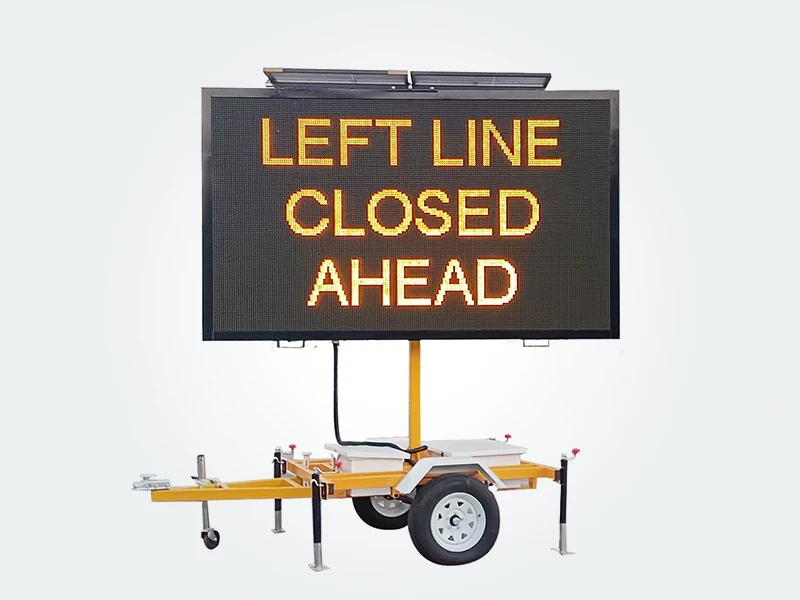
- Amber Variable Message Signs
- Portable VMS Trailers
- Solar Powered VMS Systems
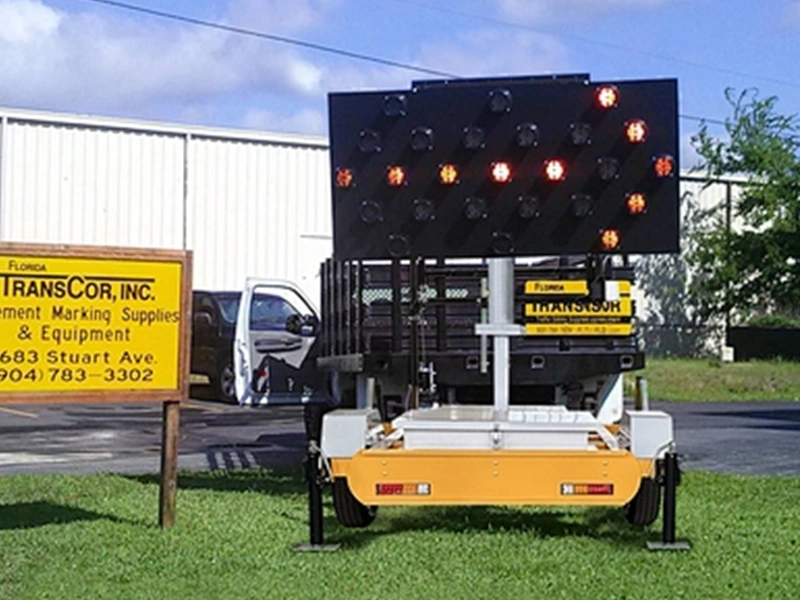
- Arrow Boards
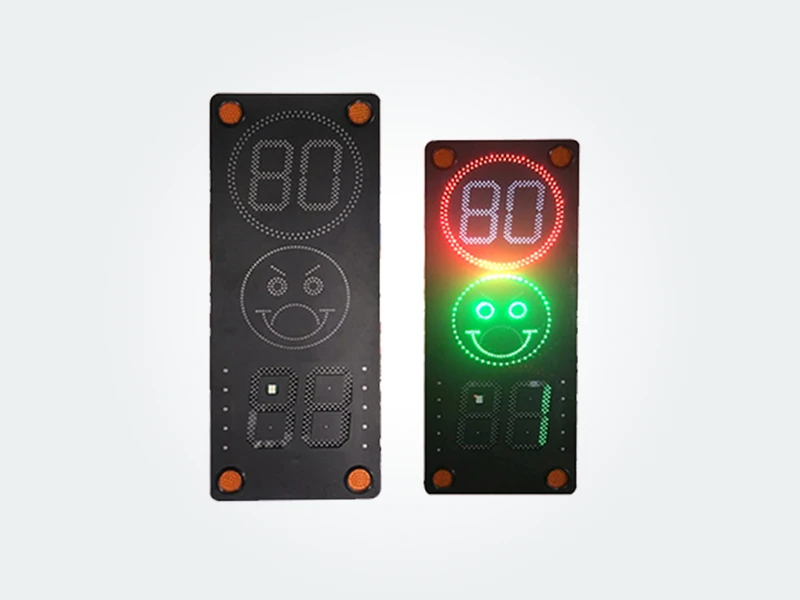
- Radar Speed Signs
- Mobile Traffic Safety Solutions
Our engineering team helps customers identify the most suitable display configuration based on project requirements, operating conditions, and budget objectives.
Whether you need a standalone Amber LED display board or a fully integrated trailer-mounted VMS system, HANKUN can provide a customized solution designed for long-term field performance.
Request a Customized Traffic Sign Solution
Looking for an Amber VMS tailored to your traffic management project?
Contact the HANKUN team today to discuss display specifications, communication options, solar power configurations, and bulk order requirements.