Why Construction Lighting Is Under Environmental Pressure
Across infrastructure markets such as highways, rail transit, and municipal engineering, environmental compliance requirements are becoming increasingly strict. Temporary power equipment used at night construction sites—especially diesel-powered lighting towers—has become a frequent target during inspections due to:
- Fuel emissions and carbon output
- Noise pollution in urban construction zones
- High fuel consumption costs
- Frequent maintenance and refueling requirements
As a result, contractors are actively shifting toward low-emission or zero-emission site lighting systems.
Among these alternatives, solar-powered lighting towers have become a practical replacement technology rather than a conceptual upgrade.
What Is a Solar Lighting Tower System?
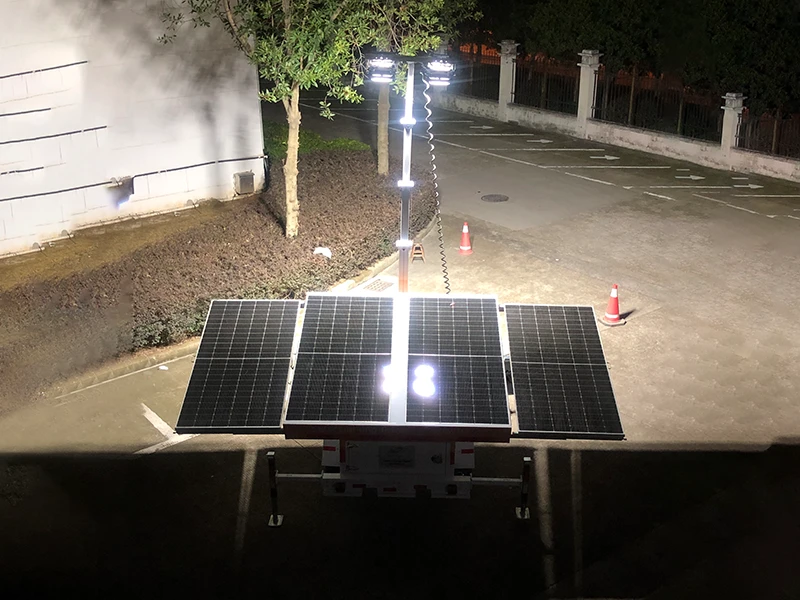
A solar lighting tower is a self-powered mobile lighting unit designed for off-grid construction environments. It typically integrates:
- High-efficiency photovoltaic panels
- Energy storage lithium battery systems
- LED high-intensity lighting modules
- Intelligent power management controller
- Mobile trailer or skid-mounted structure
Unlike fuel-based generators, the system operates entirely on renewable solar energy and does not require external power supply or fuel logistics.
Core Engineering Advantage: Zero Fuel Dependency
The most important shift introduced by solar lighting towers is the elimination of fuel-based operation.
This directly impacts construction operations in three key ways:
1. Elimination of Emission-Related Compliance Risk
No diesel combustion means:
- No CO₂ emissions during operation
- No particulate pollutants
- Easier approval in environmentally controlled zones
- Reduced risk during regulatory inspections
This is particularly important in urban infrastructure and highway projects under strict environmental governance.
2. Lower Operational Overhead
Traditional lighting towers require:
- Regular refueling logistics
- Engine servicing and oil replacement
- Fuel transportation safety management
Solar systems remove these recurring operational costs entirely.
3. Reduced Site Noise Impact
Without internal combustion engines, solar lighting towers operate with near-zero noise, making them suitable for:
- Residential construction zones
- Night urban maintenance
- Hospital or school nearby projects
Lighting Performance in Real Construction Conditions
Modern solar lighting towers are engineered to meet continuous nighttime operation requirements in infrastructure environments.
Key performance features include:
High-Output LED Lighting System
- Wide-area illumination coverage
- Stable color temperature for visibility
- Optimized beam distribution for large work zones
Energy Storage for Continuous Operation
Lithium battery systems store sufficient energy for:
- Multi-night operation
- Low-sunlight weather conditions
- Emergency backup scenarios
This ensures stable performance even during cloudy or rainy periods.
Intelligent Energy Management
Advanced controllers automatically adjust:
- Brightness based on ambient light
- Energy consumption during idle periods
- Battery protection and charging cycles
This improves system efficiency and extends equipment lifespan.
Application Scenarios in Infrastructure Projects
Solar lighting towers are widely deployed in:
Highway Construction and Maintenance
- Lane closure operations
- Bridge repair zones
- Night asphalt paving projects
Urban Rail and Metro Construction
- Tunnel entrance lighting
- Station foundation works
- Night safety illumination
Emergency Response and Disaster Recovery
- Power outage support
- Road clearance operations
- Temporary command lighting systems
Remote Infrastructure Sites
- Mountain road construction
- Rural engineering projects
- Off-grid industrial zones
Why Contractors Are Transitioning Away from Diesel Lighting Towers
The shift is not only driven by environmental policy, but also by operational economics.
Maintenance Reduction
Diesel systems require frequent servicing, while solar systems operate with minimal mechanical components.
Logistics Simplification
No fuel storage, transportation, or refilling scheduling is required.
Regulatory Stability
Solar systems are less affected by tightening emissions policies in different regions.
Lifecycle Cost Advantage
Although initial investment may be higher, total operating cost is significantly lower over multi-year project cycles.
Engineering Design Trends in Solar Lighting Towers
Recent advancements in the industry focus on:
- Higher energy density lithium batteries
- Foldable or adjustable solar panel structures
- Remote monitoring and IoT diagnostics
- Hybrid solar + backup power configurations
- Modular maintenance design
These improvements are making solar lighting towers suitable not only for temporary projects but also for long-duration infrastructure deployments.
Role of Solar Lighting Towers in Sustainable Construction
Sustainability in infrastructure is no longer a branding concept—it is a procurement requirement in many regions.
Solar lighting towers contribute to this shift by:
- Reducing carbon footprint at construction sites
- Supporting green procurement policies
- Improving compliance readiness
- Enhancing corporate ESG performance
For contractors bidding on government or large-scale infrastructure projects, equipment selection now directly influences project eligibility and competitiveness.
HANKUN Solar Lighting Tower Solutions
HANKUN provides engineered lighting solutions designed for infrastructure and traffic construction environments, including:
- Solar Lighting Towers
- Mobile Lighting Trailers
- Hybrid Power Lighting Systems
- High-Mast LED Lighting Units
Our systems are designed for:
- Highway construction contractors
- Rail infrastructure companies
- Municipal engineering projects
- Emergency response fleets
Each system is engineered with a focus on:
- Operational reliability
- Field deployment efficiency
- Environmental compliance
- Long service life under harsh conditions
Request a Project-Based Lighting Solution
If your project requires compliant, low-maintenance, and energy-independent site lighting, HANKUN can provide a tailored solar lighting system based on:
- Project duration
- Site environment
- Illumination requirements
- Mobility needs
- Power autonomy expectations